
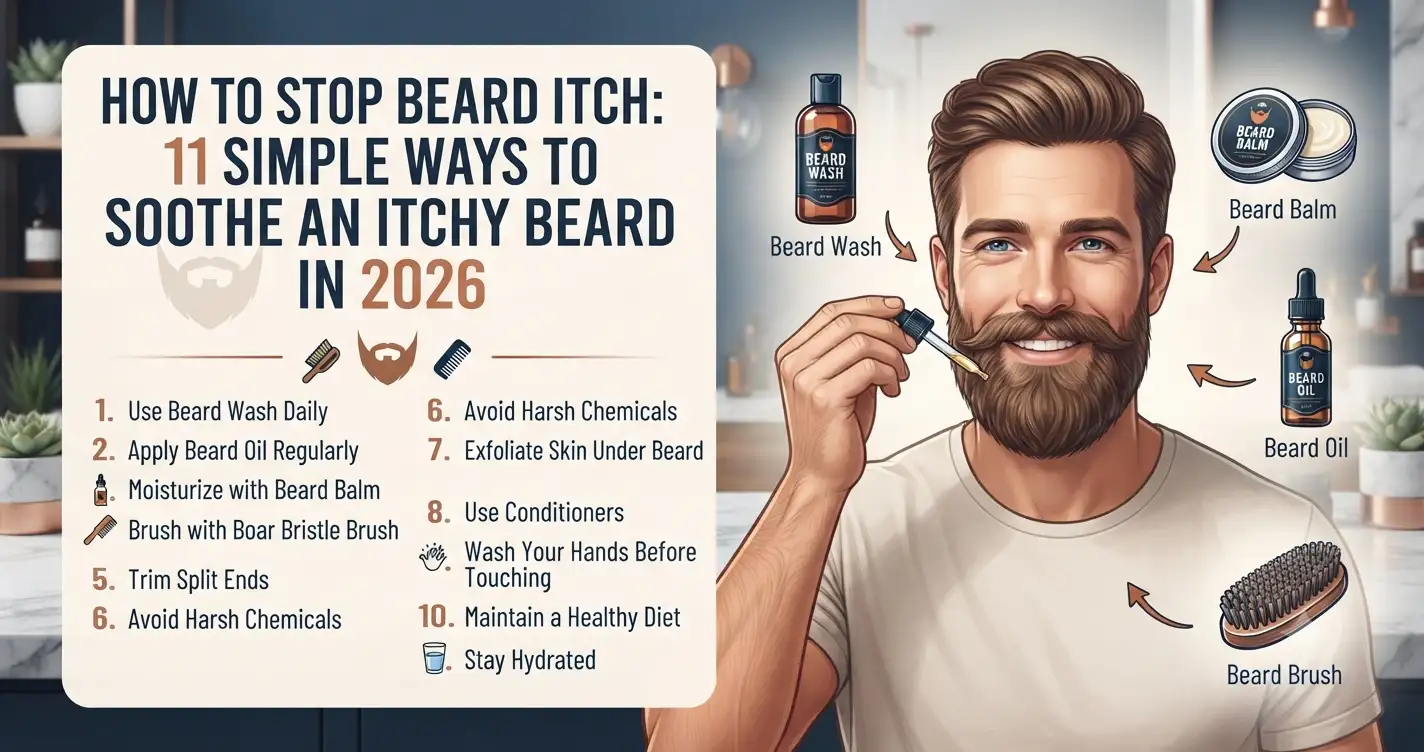
Week two of growing it out and the itching won’t quit? Here are 11 things that actually calm down beard itch — not just “give it time.”
How to Stop Beard Itch: 11 Simple Ways to Soothe an Itchy Beard in 2026
Somewhere around day nine of growing it out, sitting in a meeting, both hands end up under the jaw scratching in a way that’s definitely visible on camera. Everyone said “it gets better after two weeks” like that’s supposed to be comforting in the moment, while the actual moment involves genuinely considering shaving it all off out of pure irritation.
The “it just takes time” advice isn’t wrong, but it’s incomplete — some of the itch is a normal growth-phase thing that fades on its own, and some of it is a skin-care problem that won’t fix itself no matter how many weeks pass. Here’s the difference, and what to actually do about each.
Why beards itch in the first place
New hair growing in has a sharp, angled tip until it grows out and softens. That sharp tip can catch on skin or curl back into the follicle, especially in curlier beard types — which is a big part of why the first two to three weeks of any beard tend to itch more than month two.
The other half of it is skin, not hair. A beard traps dead skin cells, oil, and moisture against the face in a way clean-shaven skin doesn’t experience. Without any adjustment to the skincare routine underneath, that combination turns into flaking, dryness, and the specific deep-itch feeling that shaving usually fixes instantly and growing it out doesn’t.
Things that actually help
1. Exfoliate before it gets too long. A gentle facial scrub or exfoliating brush used two to three times a week clears away dead skin before it builds up under the beard. This matters most in the first few weeks, before the beard gets dense enough to make exfoliating awkward.
2. Wash it, but not with regular shampoo. Regular hair shampoo is often too harsh and strips the natural oils the skin underneath needs. A beard-specific wash or a gentle, sulfate-free cleanser used two to three times a week — not daily — keeps things clean without over-drying.
3. Use beard oil daily, not occasionally. The itch from dry, flaky skin underneath responds directly to consistent oiling — a few drops worked into the skin, not just the hair, morning or after showering. Skipping days and only applying when it’s already itchy is treating a symptom instead of preventing it.
4. Try beard balm for more length. Once the beard passes an inch or so, balm holds more moisture than oil alone and helps train the hair to lie flatter, which reduces the amount of hair curling back and irritating the skin.
5. Brush or comb it daily. This does two things — it trains hair to grow in a consistent direction instead of curling randomly, and it distributes oil evenly instead of leaving it concentrated in a few spots.
6. Keep it trimmed, even while growing it out. “Growing it out” doesn’t mean avoiding scissors entirely. A light trim every few weeks removes split, dry ends and keeps the overall shape from developing patches that trap moisture unevenly.
7. Switch the pillowcase to something softer, and wash it more often. Rough or unwashed pillowcases rub against facial skin overnight and can aggravate irritation that’s already present, especially for side sleepers.
8. Stay hydrated and don’t over-shower with hot water. Long, hot showers strip skin oils generally, not just on the face. Lukewarm water and shorter showers reduce overall skin dryness, which shows up as less itch at the beard line specifically.
9. Watch for ingrown hairs, and treat them differently than general itch. A cluster of small, tender bumps rather than a general itchy feeling usually points to ingrown hairs rather than dry skin. Gentle exfoliation and avoiding picking at them helps more than oil alone in that specific case.
10. Check laundry detergent and skincare products for irritants. Fragranced detergents or a new face wash introduced around the same time as beard growth sometimes get blamed on the beard itself when the actual trigger is a product change. Worth ruling out if the itch feels different from typical dry-skin itch — more like a rash than a general dryness.
11. See a dermatologist if it doesn’t improve after a few weeks of consistent care. Persistent itch, visible redness, or small bumps that don’t respond to oil and gentle washing can sometimes indicate folliculitis or a skin condition like seborrheic dermatitis, which needs a different treatment approach than standard beard care.
What to expect timeline-wise
Dermatologists who discuss beard care, including those referenced by groups like the American Academy of Dermatology, generally describe the sharpest itch period as the first two to three weeks of new growth, tapering off significantly by week four as the hair softens and a consistent care routine takes effect. Itch that’s still intense well past that window, especially if it’s localized or bump-like rather than a general dryness, is a signal to look closer rather than just wait longer.
FAQ
How long does beard itch usually last?
The sharpest itch typically fades within two to three weeks as new hair softens. Ongoing itch past that point is more often a skin-care issue — dryness, product irritation, or ingrown hairs — than a normal growth phase.
Does beard oil actually help with itch?
Yes, when used consistently rather than occasionally. It moisturizes the skin underneath the beard, which is often the actual source of the itch rather than the hair itself.
Should I stop growing my beard if it itches too much?
Not necessarily — most itch responds well to exfoliating, washing less aggressively, and daily oil. If itch persists with consistent care for several weeks, a dermatologist visit is more useful than shaving it off and starting over.
Is it normal for a beard to itch more in certain weather?
Yes — cold, dry air and indoor heating both pull moisture from skin, which can make beard itch noticeably worse in winter months even with an otherwise consistent care routine.